
Installing a Tetherspout
And how they work

There’s growing interest in tetherspouts out there and it makes sense—tetherspouts offer a lot of unique advantages to the chastity cage wearer that you really can’t find elsewhere:
The security of a PA without the months of healing and upsizing.
Being able to stand to urinate, even in a toilet (vs just a urinal).
Allowing our uncircumcised brethren to do the same.
Providing a way to secure shaft-only devices although The Grip solves this quite well without a tetherspout.
Of course, their main disadvantage is the lack of proper cage support. In my own experience, with that support, tetherspouts can be worn indefinitely without even feeling their presence.

I think in this regard, I’m more sensitive than most as it seems some people are just wearing them with padlocks but for me, I need a solution that allows the spout to angle itself appropriately in my urethra. A cage I’m currently designing for someone uses such a solution.
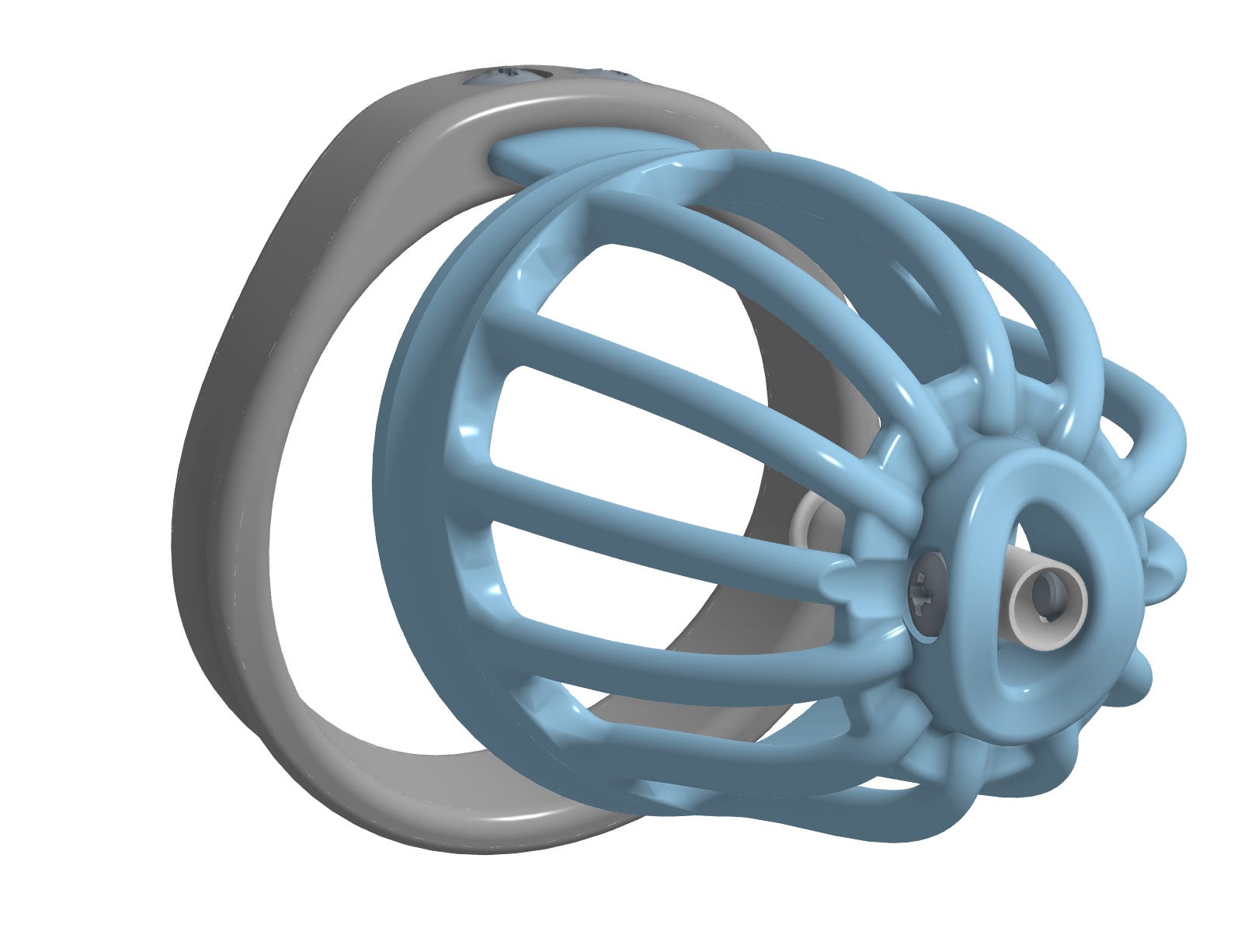
With such a solution in hand, well, welcome to chastity nirvana.

But now let’s talk about how to actually get to that promised land.
And FYI, You can also find another set of instructions by a better author here but since it’s on Blogger and hasn’t been touched since 2015, I thought I should write my own set before someone decides to shut Blogger down.
Anatomy
Below is a cross section of a penis. Obviously this isn’t entirely accurate. Not even close, But it’s accurate enough for our purposes. There are a couple of things to note. You see that larger area of the urethra just inside the tip (the meatus). That’s the fossa navicularis and that’s where all the business is going to be happening. And you see that little blue oval? I don’t know what that’s called but let’s call it the donut and it’s how tetherspouts work.
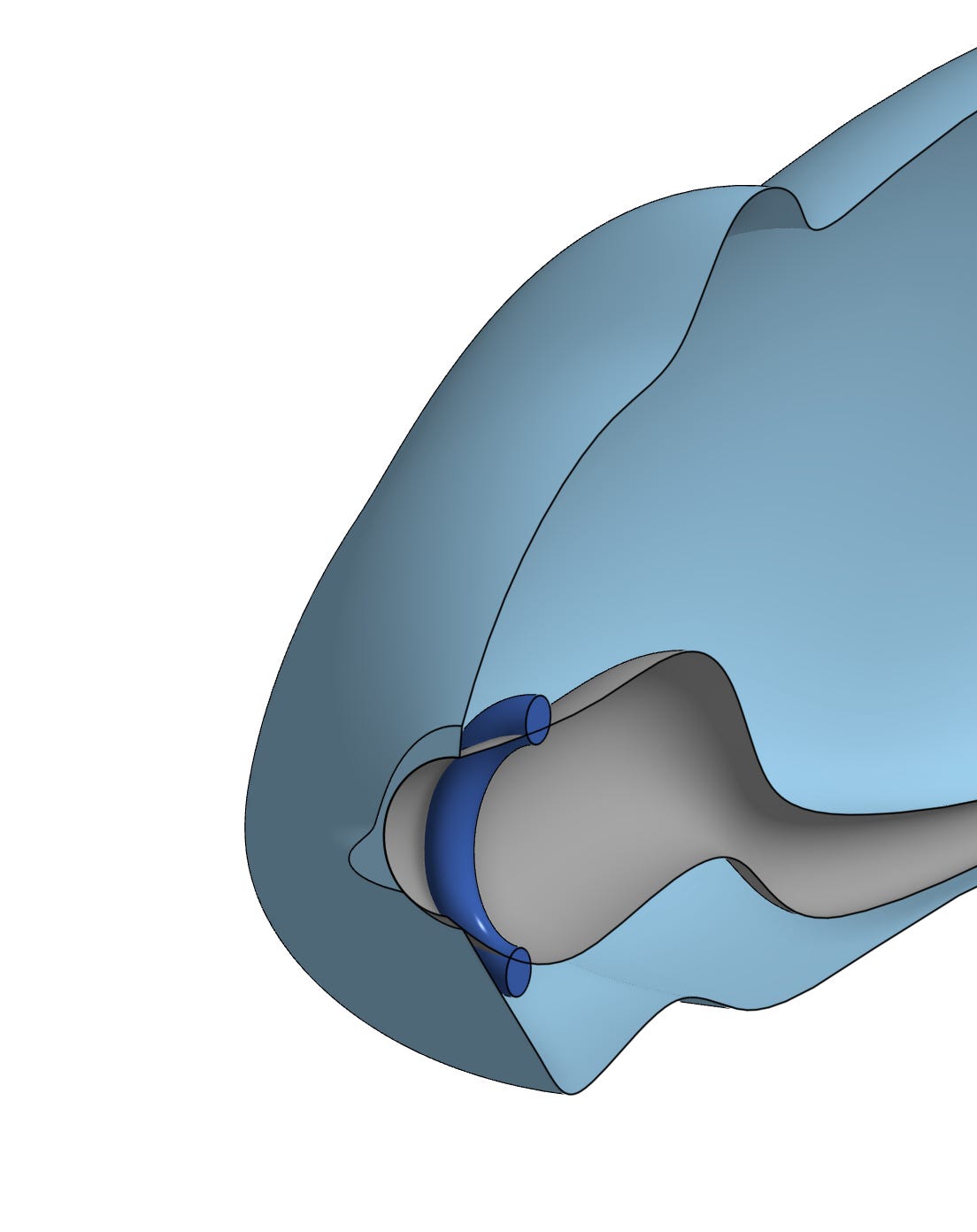
The critical thing is the donut is taller than it is wide and it’s fairly solid—it doesn’t easily stretch.
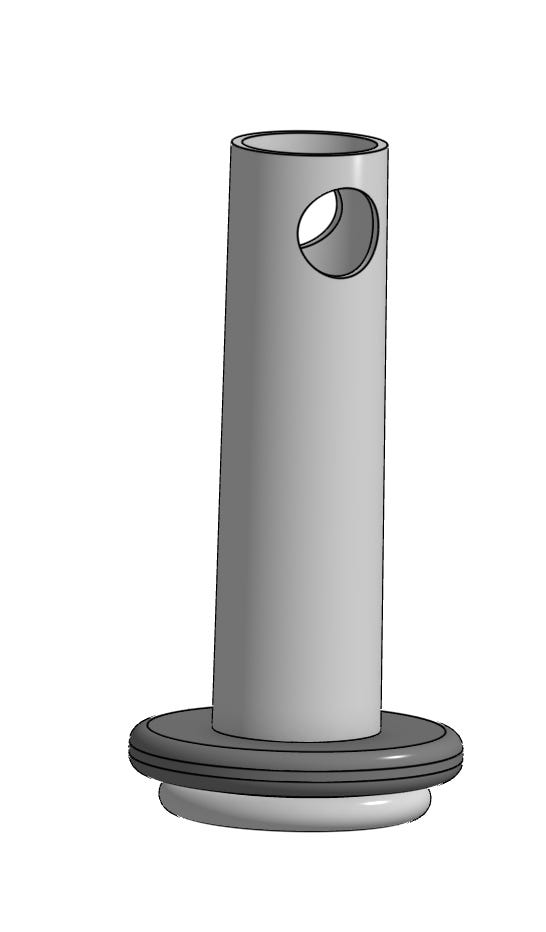
Now, this is a tetherspout. It consists of the spout (the tube) and the retainer, what is basically a washer. Critically the flange at the end of the spout prevents the retainer from falling off and the retainer’s outer diameter is larger than the flange. Do make sure your retainer doesn’t slip off the end of your spout before installing. You’d hate to have been given a retainer that’s too large for your spout.
What we are going for is this:
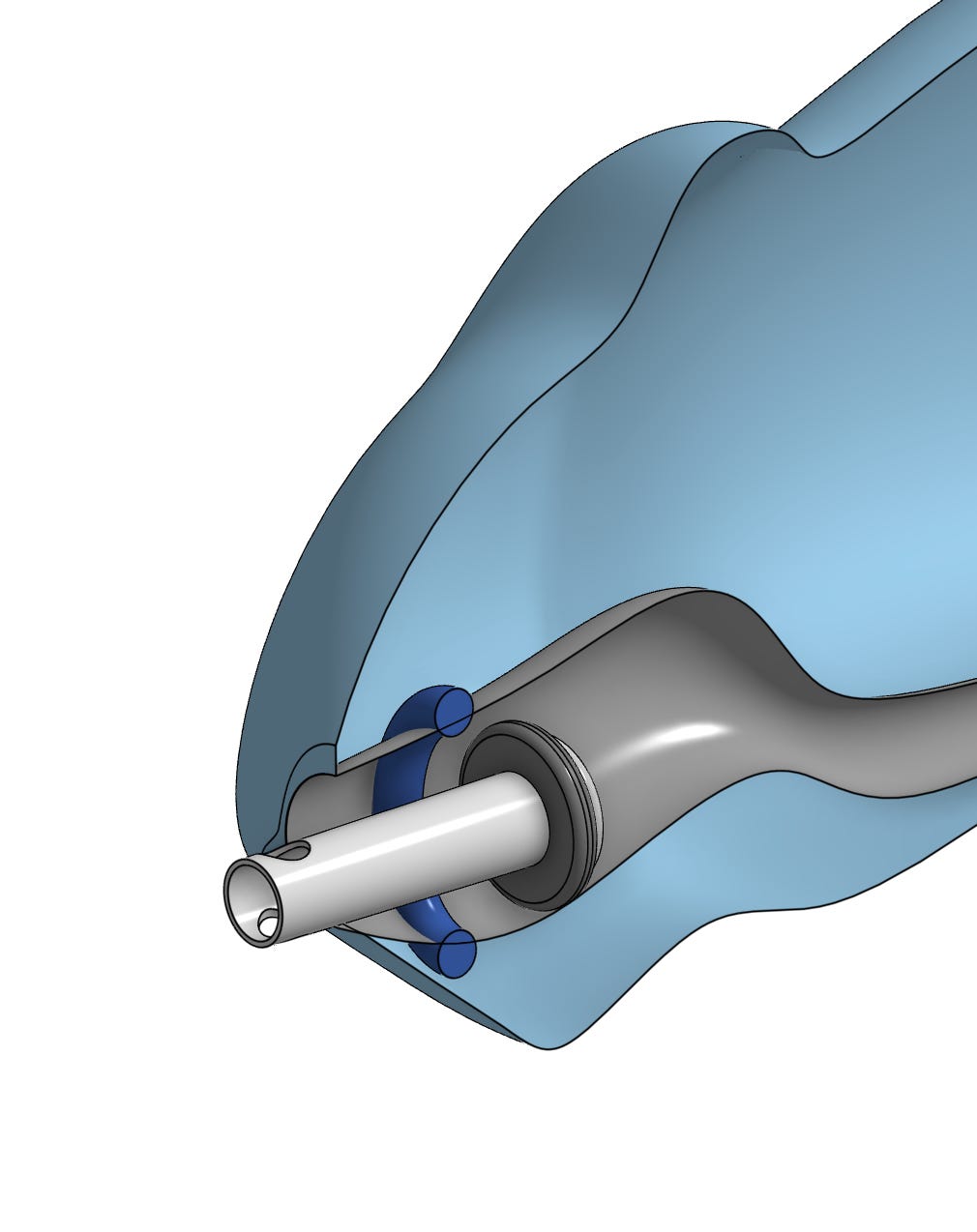
If you don’t see how it’s being held in place, let me hide everything but the donut and the tetherspout / retainer:
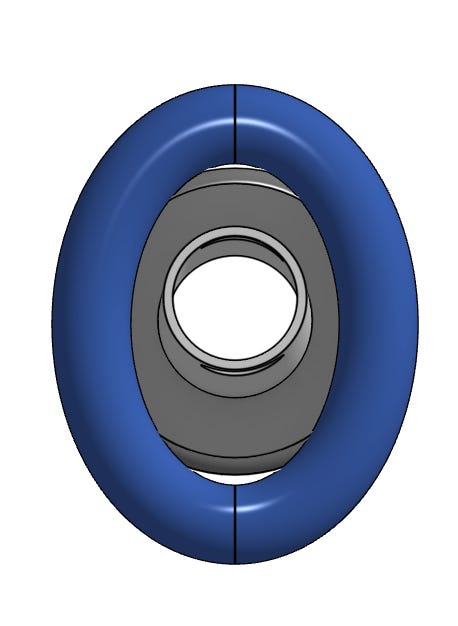
And this is how it all works. The donut is both narrower and taller than the retainer. So, how exactly do we get the retainer in there. Easy, we rotate it:
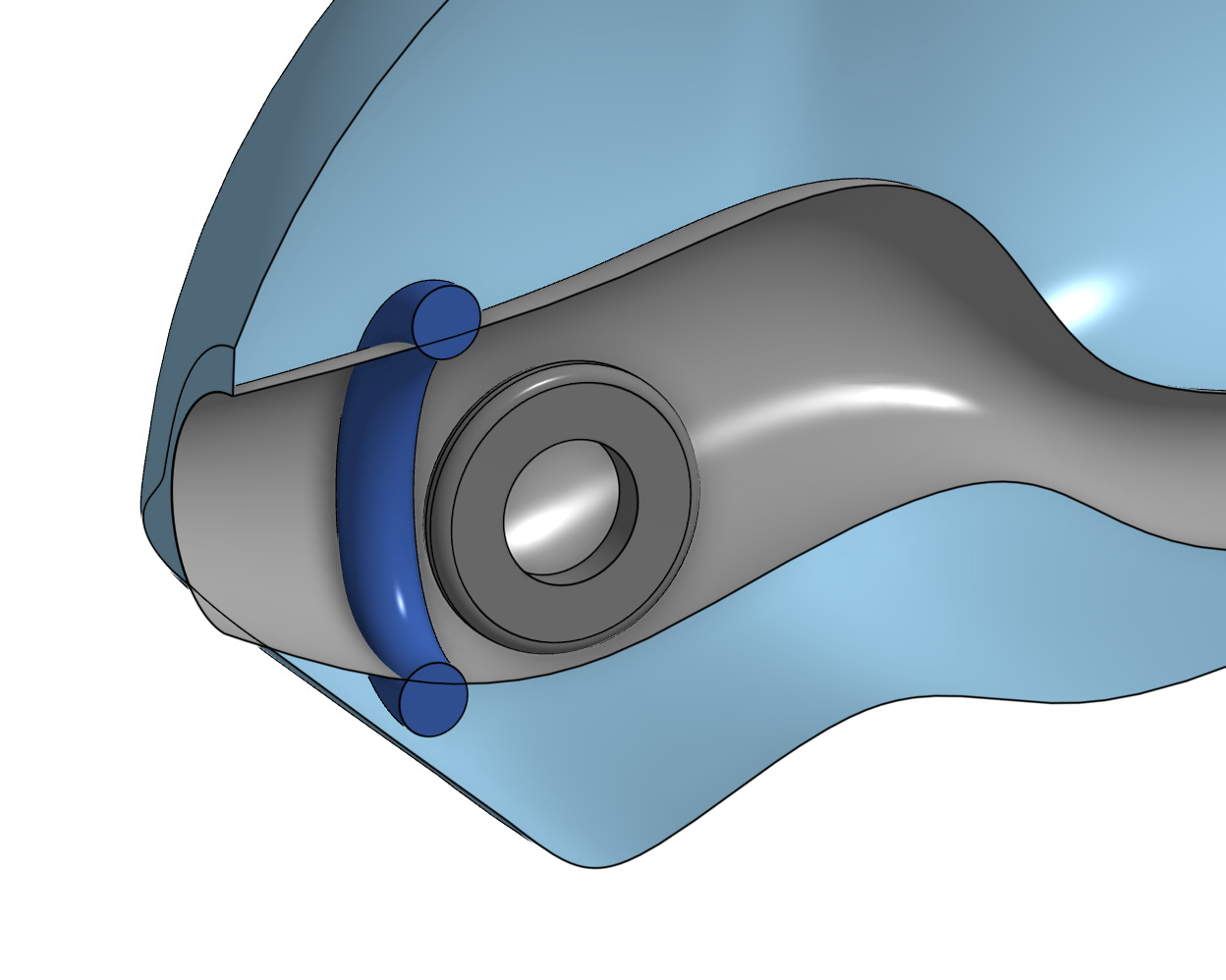
In this orientation, the retainer can get by the donut. A properly sized retiner can just get by the donut and will kind of pop through. When you’re just starting, it’s probably good to start with one that’s too small so if you have the confidence that if you’re having issues, you can always pull it out no matter how it’s oriented (but perhaps with a bit of pain).
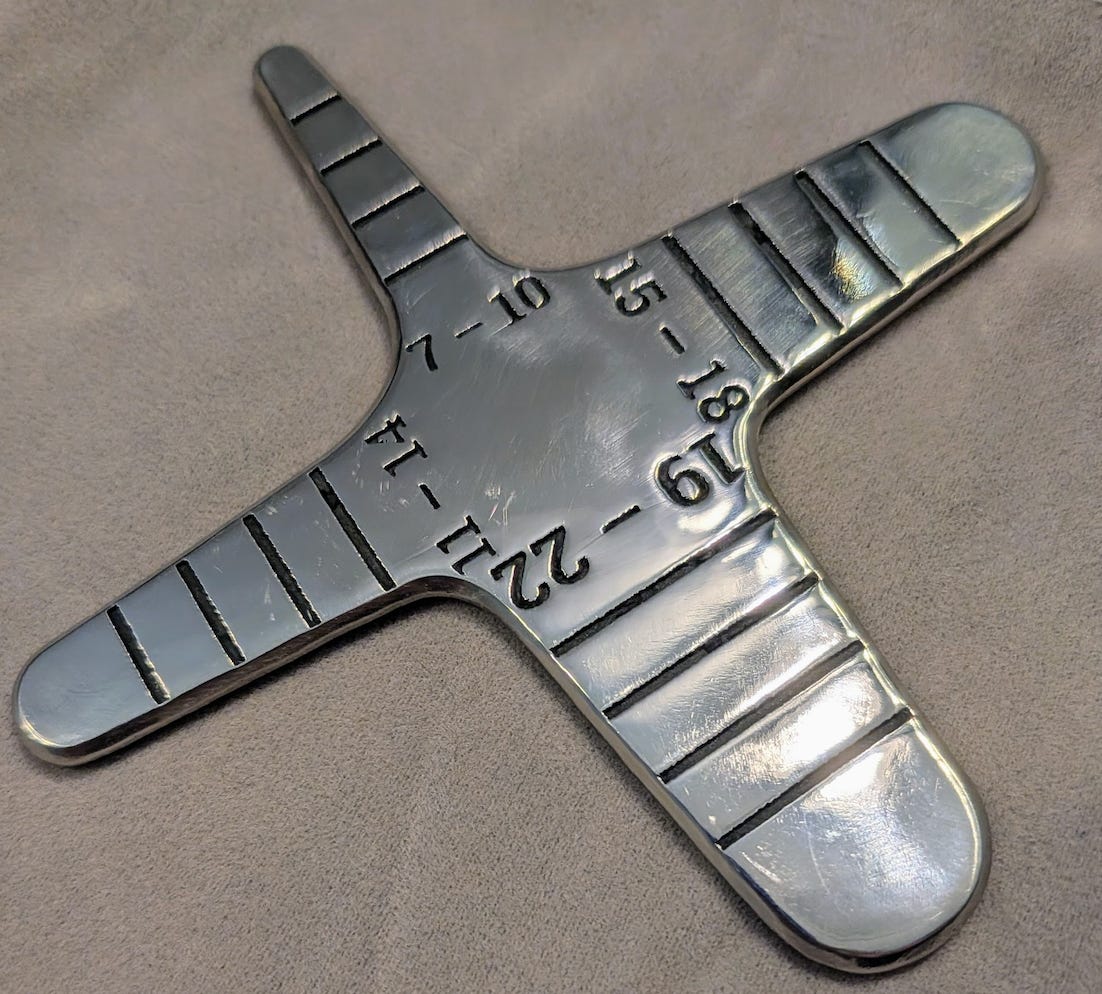
Sizing… sizing should be obvious now. You want a spout whose flange is narrower than the donut. It can’t really be too narrow so long as it holds the retainer. You want a retainer that is shorter than the donut but wider. Some people use oval retainers. I won’t get into that as that adds another layer of complexity. Anyway, to measure properly, you’ll need Dittel sounds. Unlike the usual sounds, they are flat allowing you to measure both the height and width independently. As I can’t find a ready source for them that go up to the sizes we need, I’ve made my own design here.
So, how do we actually install this thing. Well, first thing we do is get me to stop writing in paragraphs and start writing procedures. Please read all of the directions before starting. I am not a professional procedure writer so if you don’t read it all and screw up because I can’t write procedures to save my life, it’s your own damn fault.
A Note on Ternence
Ternence’s (Amazon) spouts are cheap. But they are not well designed in the larger sizes. The spouts themselves become very long and very wide as you get into those larger retainer sizes. After you read through these instructions, you’ll see why long spouts are difficult to install and why having a wide spout has no real benefit. I’m not sure I would go beyond a 12 mm retainer in Ternence. I wear 16 mm in BAWR. But under 12 mm things are more reasonable although many may still find them too wide.
So, get yourself a small Ternence spout if you just want to see if this is for you and if that’s the size you actually need then you’re good but if you’re on the larger side, you’ll want BAWR.
What You’ll Need:
Two tetherspouts and a retainer or a tetherspout and that Ternence installation tool. Everything should be polished 316L or titanium. Some people use composites (rubber, plastic, etc). That is too risky for my tastes as deposits can fuse the retainer to the spout. And that would suck.
Dental floss. That string that came with your spouts? Throw it away. I use unflavored floss. I don’t know if mint would burn or anything.
Sterile water-based lube. You can get it on Amazon. It’s used for catheters.
Rubbing alcohol (isopropyl 70%)
Soap and water
Optionally a binder clip or something similar.
Optionally something heavy like a Constitutional Law case book.
Beer
Installation
Step 1: Sanitize.
Wash your hands with soap. Make sure everything you’re going to be putting into your urethra has been sanitized. My spouts live in an alcohol bath. If you bought BAWR, you will have two spouts of the same size. One you will be installing and the other will be used as a poking device to help you push the other one in. I’ll call this second one the installation spout.
If you bought Ternence, you got some strange long tube. I don’t know how they expect you to use it but I just use it the same way as I do the other BAWR spout.
You also got a piece of string or something. Throw it away. We’ll be using dental floss.
Step 2: Floss.
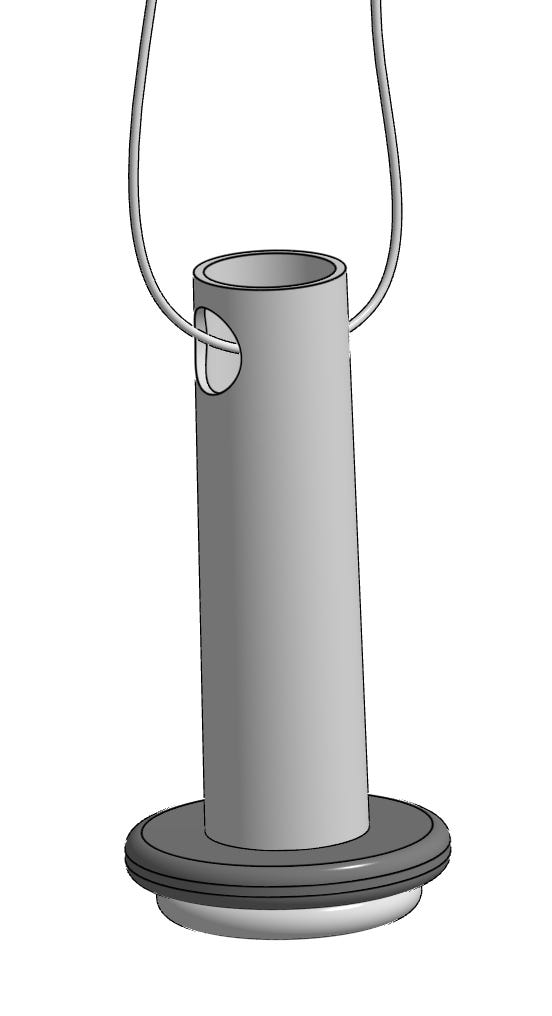
No, not your teeth damnit but do floss your teeth or only the teeth you want to keep. No, put the retainer on the spout and then thread about a foot of floss (or more—it might be helpful since this is your first time to get about a few feet) through the transverse holes like below (yes, I just modeled dental floss—this is how much I hate drawing). You can also thread the floss all the way through your installation spout exiting the flange side. I don’t bother with this as I don’t find it helps but my diagrams will show it like that. Experiment with what works for you.
As you will freak the fuck out if during installation you just pull on one end of the floss and pull it straight out, take that binder clip and clip the ends together. What may also be helpful to free your hands from holding the floss is to lay it on the counter and put something heavy on it like a con law case book to free your hands.
Step 3: Lube everything up.
Your urethra has no mucus at all. And it’s thin. And it’s sensitive. Get sterile lube, the kind of lube that is used for catheters and put a generous amount on the spout and the retainer and might as well put some on your meatus (your tip).
Step 4: Relax
This thing takes some practice and it’s easy to get a little freaked out. But just relax and if it doesn’t go well, don’t worry, nothing you are doing is putting yourself into an emergency situation. You can take all the time you want. You can sit and have a beer while you’re trying to get things installed. It’s fine. Seriously, just relax.
Step 5: Start shoving crap up your urethra
Align the spout so the holes are facing up / down because this will keep the floss in an orientation that makes it easy for the retainer to rotate into place.
Push the spout in flange-first until it’s pretty much all the way in and you have floss coming out of your meatus. If you want to give yourself some self-assurance, notice how much it just kind of wants to come back out. The thing isn’t going to just slide down your urethra.
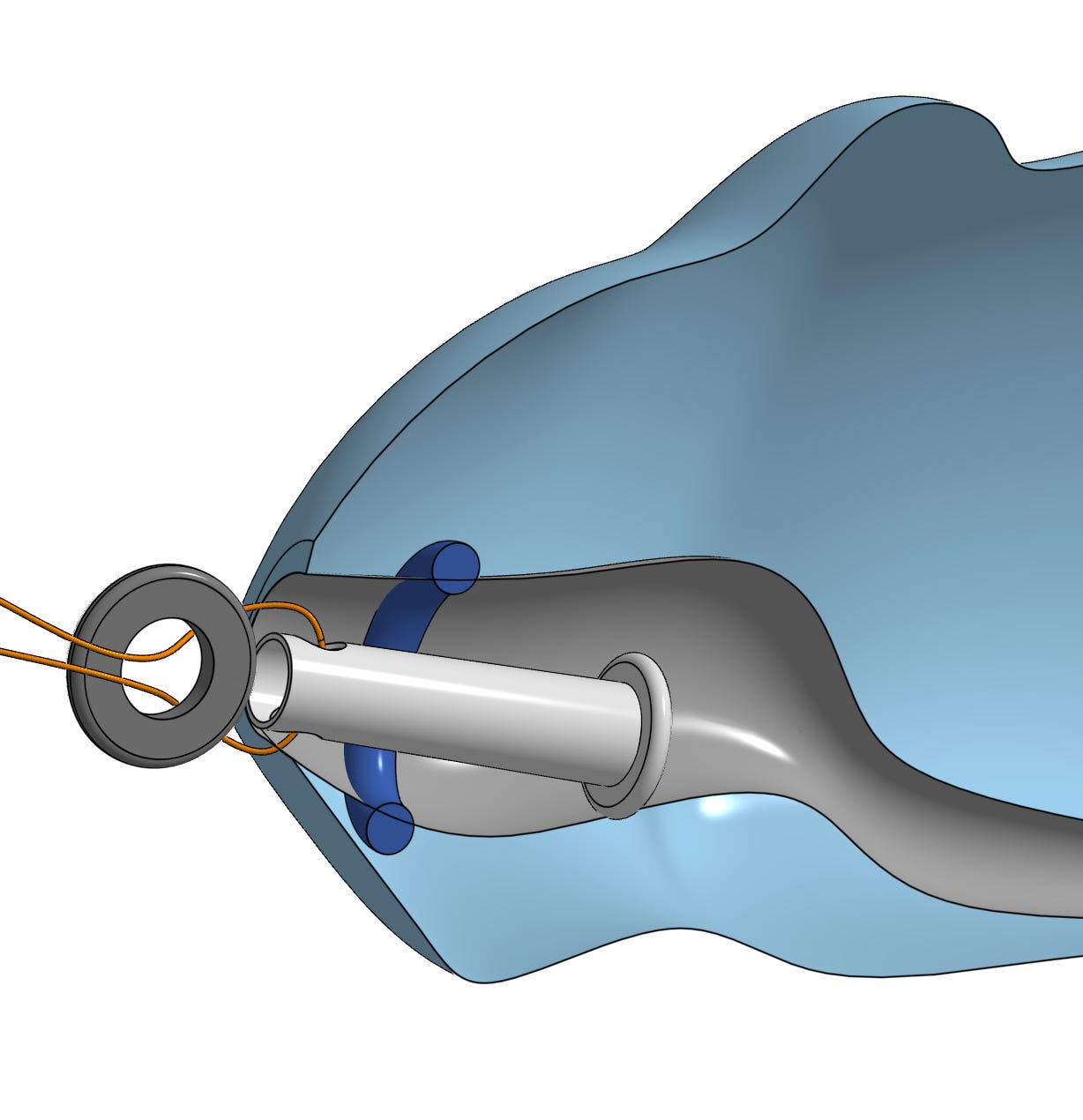
Step 6: Push it further in.
With the retainer in a vertical position push it in with your finger. A properly sized retainer will almost have to be squeezed in but it’s okay if it’s too small especially for your first time; in fact you might want to practice with a retainer that’s too small, small enough that you could pull it out with a bit of discomfort if you had to.
Once it’s as far as you can push it with your finger, get the installation spout and push it further in. This is a bit uncomfortable as you are pushing that flange on the spout you’re trying to install pretty deep so be gentle but you need to get the retainer back far enough so it can rotate into place. Note that your urethra bends down towards the bottom of your shaft so push at a bit of an angle, it actually makes it a bit more comfortable.
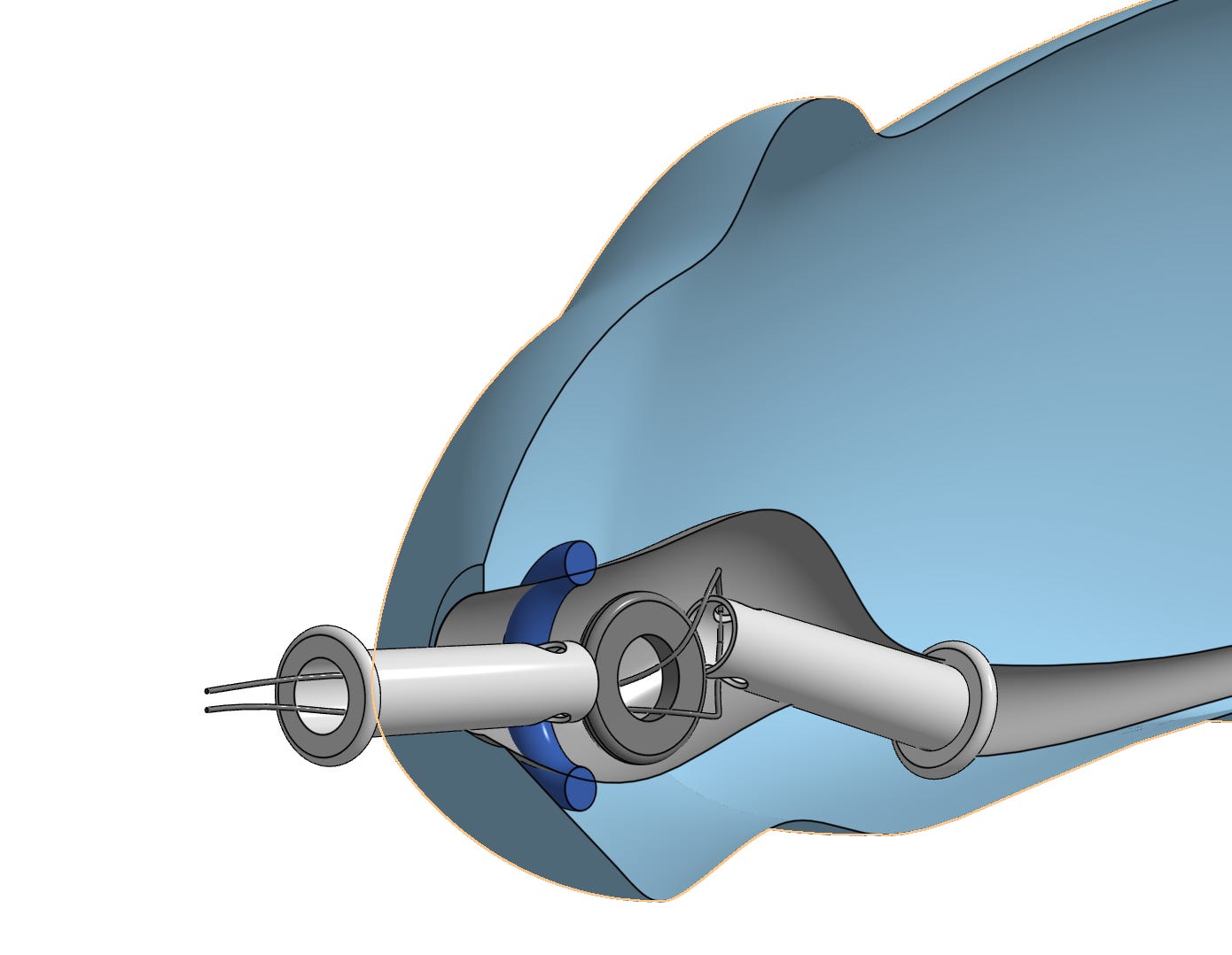
This is where I wish I could draw so I didn’t have to use CAD. Yes, the flange will push past the fossa navicularis and you can feel it pushing into a tighter area when you’re installing it. You do want some depth here as that retainer will need some room to rotate around. And this is why you don’t want a 38 mm long Ternence spout that’s 14 mm wide or something.
Step 7: Rotate the retainer into place.
This is the tricky part and the part that just takes practice and it’s also the part that is kind of hard to explain.
First of all, do not squeeze your head from the sides. Hold it gently or hold it from the top and bottom. Remember we want that retainer to rotate and if you’re pinching your glans, you’re going to be making it much harder on yourself.
What I do is hold the installation spout in place and kind of jiggle the floss a little bit. I also wiggle the installation spout a bit. Basically the retainer kind of wants to flip because of it being pushed between the spouts and thanks to the floss, once it does it will end up on one of the two spouts and you really don’t care which one.. Now, I personally can’t tell when it’s actually rotated. I just jiggle for a second or two and then, still applying pressure on the installation spout, I pull on the floss and bring everything out. No matter which spout it ended up on, once it hits the donut, it will slide onto the installed spout.
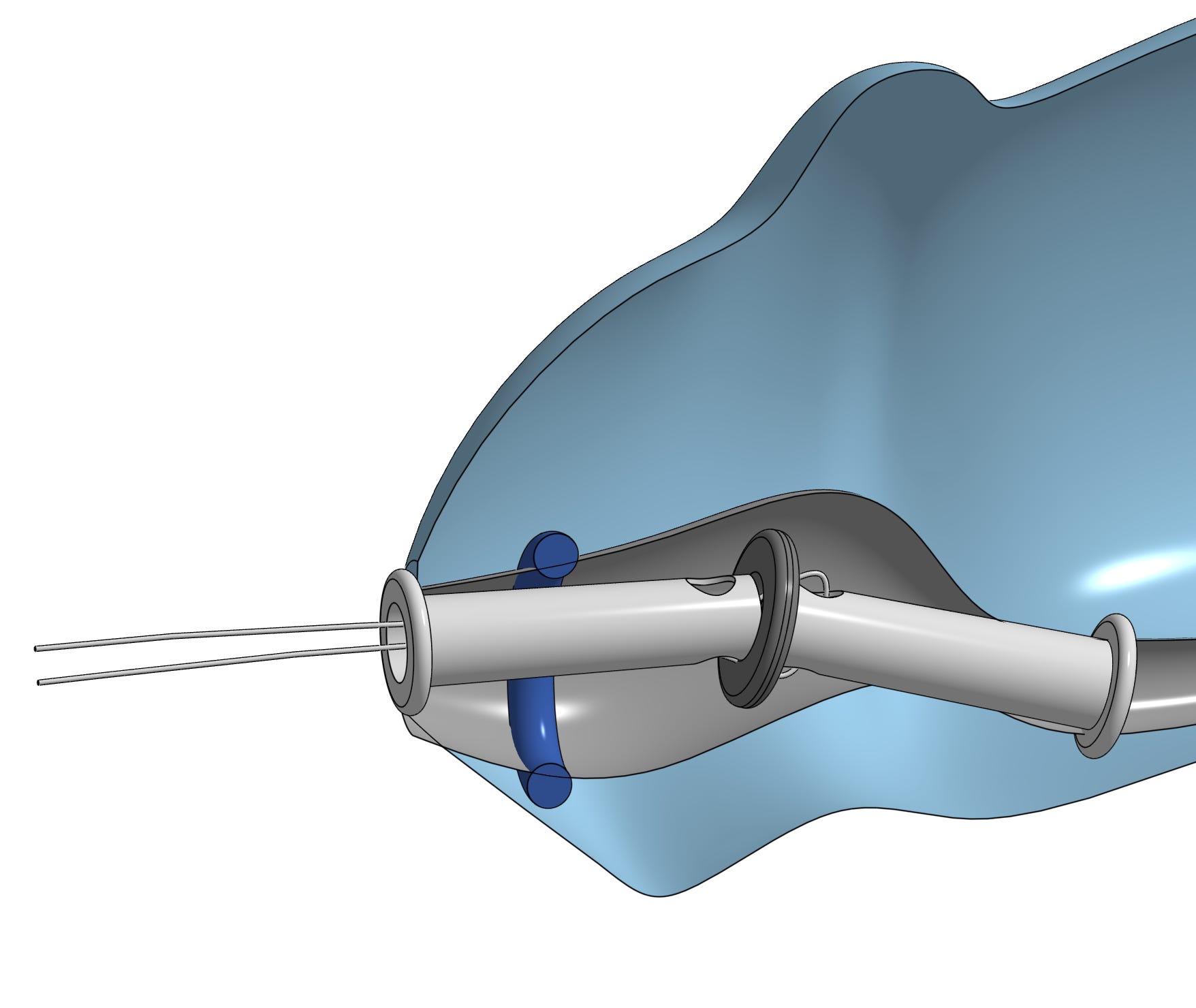
Now, if there is any resistance to pulling it out, one of two things have happened. Either the retainer hasn’t rotated or it hasn’t rotated and it’s on the side of the installed spout. If the former, just try again. If the latter, this is when you’ll want that beer.
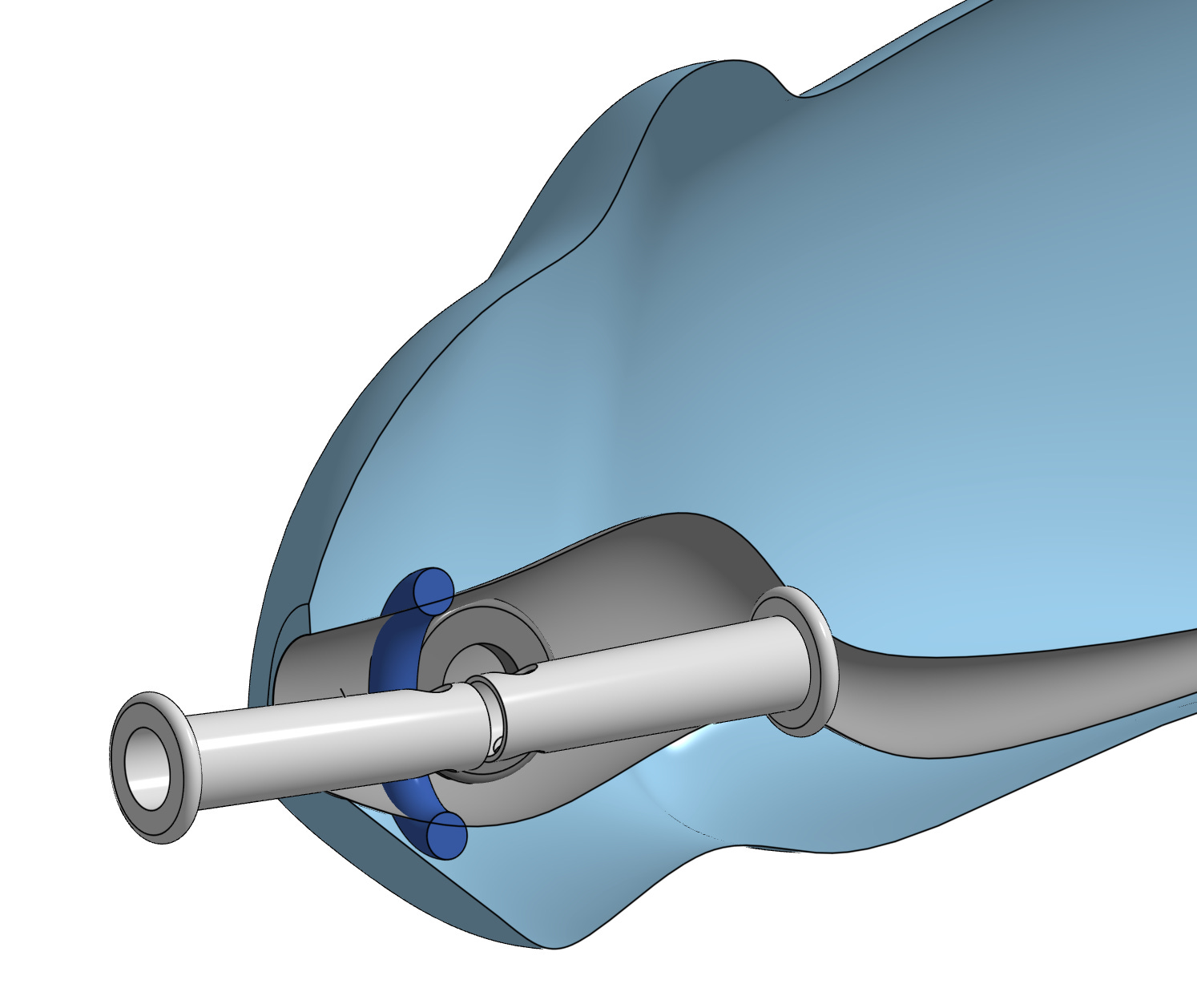
I’m not drawing the floss here because it would be a real pain (and if you don’t have floss there, well, have another beer). But this isn’t an emergency—nothing we’re doing can cause an emergency. And if you pull on the floss a bit and look into your urethra, you can actually see that this is what’s happening. Now how did it get in this position? I think this happens if you try to rotate the retainer before it really has room to rotate and you ended up pushing the retainer past the spout.
But don’t panic. All you need to do is push the spout back past the retainer and try again. Push it in a bit, give it some depth and you should be back to where you started with the retainer between the two spouts. I think this is another good reason not to have the floss going through the installation spout as you can see why it might make correcting this situation a bit more difficult.
But seriously, don’t panic (can you tell this is where I once panicked?).
And if you absolutely cannot get it, you can get everything out. With everything pulled right against the donut, just squeeze down on it from behind and it should pop through. It might not be very comfortable because it’s not right in the middle of the donut but it should come through. You can also grab a pair of your wife’s very expensive tweezers and just pull it through (sanitize and don’t tell her what you did with her tweezers).
Step 8: Take a leak.
This is just a precaution but after installing or uninstalling, I take a leak to flush anything out. If you’re empty, drink that beer.
Now what?
You’re golden. If posting pictures of your junk on Reddit is your thing, slap a padlock on it and post a photo on r/tetherspout. But even if you don’t do the photo thing, tell us you got it in and we’ll all welcome you to the club of people who assemble hardware inside their penis.

Uninstallation
That’s a word, right?
This is pretty much the reverse of installation except it’s easier. I don’t need diagrams for this; you’ve seen them.
Step 1: Sanitize.
Sanitize the (un)installation spout and wash your hands. Also, have some urine in your bladder for later or make sure your keyholder is in the mood (that’s probably why you’re removing it anyway).
Step 2: Lube.
Put some sterile lube on the installed spout and the (un)installation spout.
Step 3: Thread floss through the holes of the installed spout.
Step 4: Push the spout through the retainer.
Pinch your glans where the retainer is and hold it in place and push the spout as far in as you can and then grab the (un)installation spout and push it nice and deep. You should feel metal rubbing on metal as the spouts slide through the retainer. You do want it deep like you had during installation so the retainer has room to rotate and doesn’t hit the spout.
Step 5: Rotate the retainer.
This is pretty easy. Just kind of pinch it from the sides and it will rotate into the orientation you need to remove it.
Step 6: Pop it out.
You can pull on the floss but I find it easier to just squeeze behind the retainer and just pop it through.
Step 7: Pull the spout out.
And take a leak. Or have sex which is probably what you were doing this for to begin with. But don’t tell your wife that your orgasm is also to flush bacteria out of your urethra. (before anyone objects any health risks to your wife here, you know where that bacteria came from? The tip of your penis—you’re already putting it inside of her).
Quick FAQ
What if I bleed?
This can happen especially if you have a larger size Ternence spout because they are extremely long and wide in the larger sizes. If you see any blood, don’t freak out but give it a break for a few days. With practice (or a BAWR spout—not sure which one it was for me), you’ll never bleed.
How long can I leave it in for?
Indefinitely. Seriously.
If I don’t keep it locked will it go up my urethra?
Nope. If you don’t believe me, put some floss through it and shove it as far into your penis as you can. Now walk to the kitchen and back. There’s a good chance it’s come back out again. But even if it didn’t, that flange is pretty wide. Your urethra is only 6 mm or so. Remember how it was uncomfortable pushing that flange all the way back there when you were installing?
Can I leave it in for sex?
I know one person who does this. I haven’t tried and Jenn would kill me.
Can I climax or get erect with it in?
Yep. No issue at all.
Is it uncomfortable when erect?
Without the cage, never. With a narrow cage, it can be as your erection causes the fossa navicularis to be crushed down on the retainer. I only experienced it in the Bijou and not in any other cage. I wouldn’t call it painful, just uncomfortable.
Can I swim / bathe in it?
I wouldn’t but I know one guy who does and his answer to bathwater going up his urethra? “Just piss it out, man”. Kind of a memorable line.
If you don’t want to remove it, you can get a little nylon cap to put over in on Amazon.
Do I need experience with sounding?
No, I had none. I still have none.
Do I need to lubricate it occasionally?
Nope. It’s not going to be moving that much.
How do I clean it?
You don’t need to clean it when it’s in.
Suggestions?
If there are any experienced users out there who have some better ideas on installation, please comment.
I think I will try it soon. .. I have experience with sounding so it will not be very difficult for me
This looks like a rather interesting piece of kit. Thanks for sharing!